HGC 8 Paints:
- When properly cured, these paints achieve a durability of at least 500 cycles in an automatic dishwasher,
- can be used to decorate products intended for contact with food,
- are miscible with one another,
- are available in glossy opaque and transparent finishes,
- are also available in matte opaque or translucent finishes,
- include metallic and other special-effect shades, such as chameleon, neon, or pearlescent,
- they cure at temperatures between 170 and 200 °C.
For more information on proper curing , see the article “Crosslinking: The Key to Durable Organic Paint / Part 1.”
Three Possible Color Settings for the HGC 8
For brush painting, we have gradually developed three basic formulations in the HGC 8 series:
1. HGC 8 in its original formulation
This is the original formulation intended for spray application. The paint has a lower viscosity and is therefore thinner.
This formulation is particularly suitable for:
- edging,
- filling larger areas,
- stained-glass imitation,
- renovations.
2. HGC 8 with thickener
Adding a thickener increases the paint’s viscosity, making it thicker than the standard version.
This variant is particularly suitable for:
- fine painting,
- the pull technique,
- outline painting,
- grooving.
The painter adds the thickener themselves, up to a maximum of 2%.
3. HGC 8 SC
HGC 8 SC is a screen-printing ink and also the thickest version of this paint. It is suitable for anyone who needs a paint with very high viscosity for their painting technique.
What to Consider When Choosing?
When selecting the appropriate formulation, consider whether you want to paint fine details, outlines, edges, larger areas, or use another specific technique. The type of brush chosen and the painter’s personal preferences are also important.
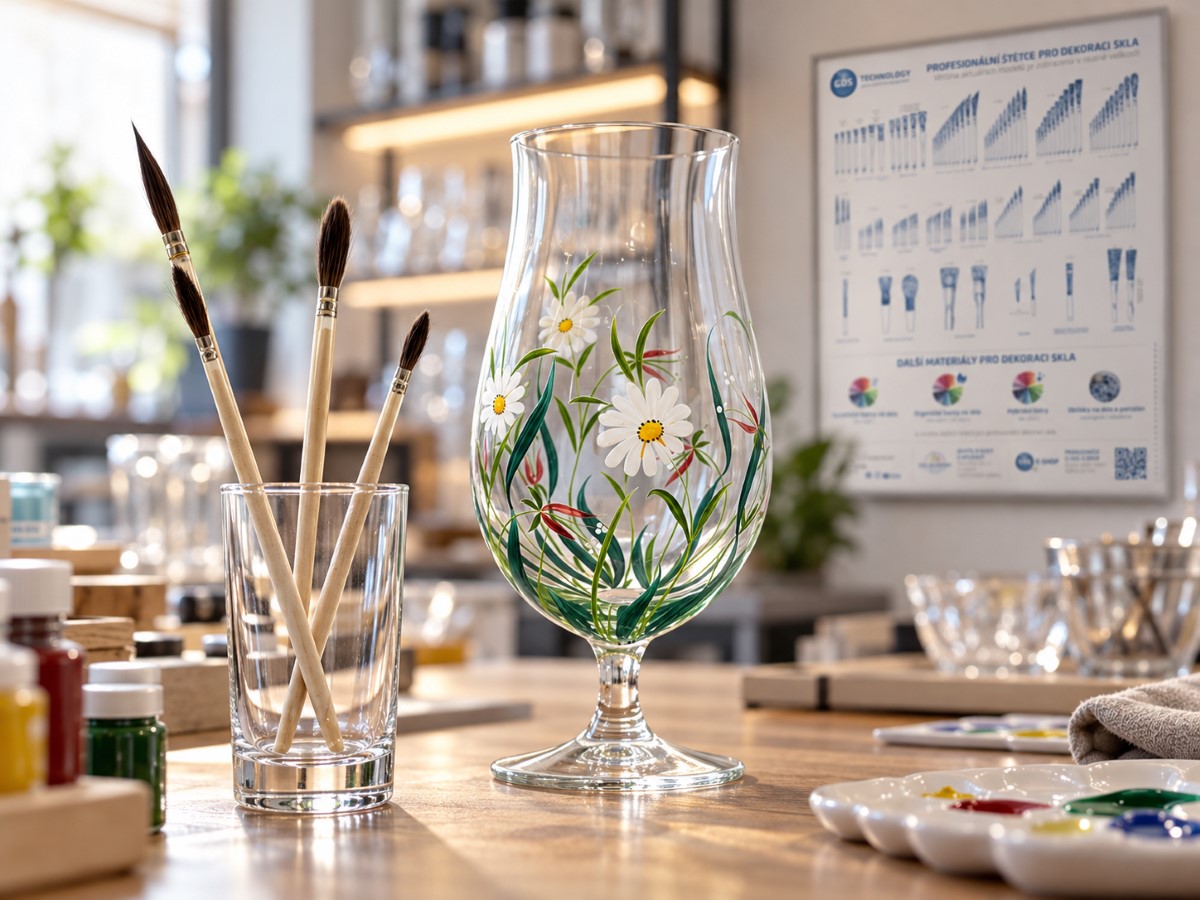
For hand painting, we primarily recommend brushes with natural squirrel or marten hair. Stiffer and synthetic brushes are not recommended for these techniques.
Different types of paint also behave differently when applied with a brush. Glossy paints—whether opaque or transparent—have different properties than matte, opaque, or translucent paints. Matte and metallic shades are generally thicker.
Practical Tips for Working with a Brush
While working, make sure the paint in the brush does not dry out. Rinse the brush regularly during any extended breaks.
- When using thicker paint, you can overlap individual layers after they have dried and continue painting.
- After finishing the painting, wash the brushes thoroughly with water. To remove the last traces of paint, we also recommend using technical alcohol.
Painting with Hybrid Listres
We must also mention LUP hybrid listrs. Although they are not organic paints in the strict sense of the word, given their curing temperature of 160 to 200 °C, they rightfully belong in this article.
Hybrid leafing paints are the only functional alternative to true leafing paints. You can see an example of how to work with them in the video on leafing with hybrid paints.
When painting with hybrid leafing paints, use traditional leafing brushes made of squirrel hair. After use, wash them with industrial alcohol, not water.
Need help choosing the right product?
When selecting the appropriate HGC 8 paint formulation, it is always important to consider the painting technique used, the type of brush, the desired appearance of the decoration, and the painter’s personal preferences.
If you’re unsure which variant will be best for your project, describe your technique and the desired result to us. We’ll be happy to recommend the appropriate paint formulation and a suitable brush.
Article written by:
David Batla
Owner of GDS Technology s.r.o.

 +420 571 612 420
 gds@gds.cz



 EN
 CZ
 hu
 bg
 fr
 ro



 Settings