 +420 571 612 420
 gds@gds.cz


 EN
EN
 CZ
CZ
 hu
hu
 bg
bg
 fr
fr
 ro
ro


Tensile strength and influence of technical parameters of adhesives
Thetensile strength depends on the technical parameters of the individual adhesive types and the size of the bonded area. When calculating the load capacity of the bonded joint, it is necessary to take into account the effects of various influences (impacts, shocks, stresses due to thermal expansion). However, it can be said that the strength of a properly bonded joint is in principle superior to the strength of the glass itself.
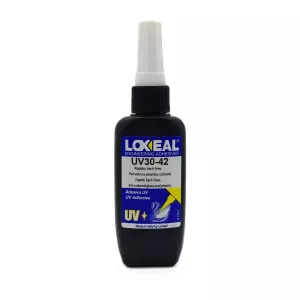
Prolonged exposure to moisture causes the adhesive to become enriched with water, with a consequent loss of strength. The effect of water can be prevented by sealing with a layer of silicone or by using Loxeal 30-35 adhesive with increased moisture resistance.
After final curing, let the adhesive react for about 3 hours, then clean the glued surfaces with a cleaning agent.
The glued joint can be dismantled
If the properties of the bonded parts allow it, disassembly is possible at temperatures above 200°C.
Softening of the cured joint occurs from approx. 150°C. A heat gun, for example, can be used for heating. Uneven heating or cooling can result in glass breakage. In principle, disassembly of already bonded parts is not recommended.
Read also the other articles in the UV gluing series:
Preparing glass surfaces before bonding
Tips for a flawless application of UV adhesive when bonding glass
Typical joints when bonding with UV adhesives
Curing UV adhesives: what affects the curing time and bond strength
This topic is also part of our glass bonding seminar.
The article was written by:
Martin Valášek
Flat glass, paints, UV adhesives
technical support, blasting systems


 Settings